Welcome to Linqing Hairui Bearing Manufacturing Co., Ltd.


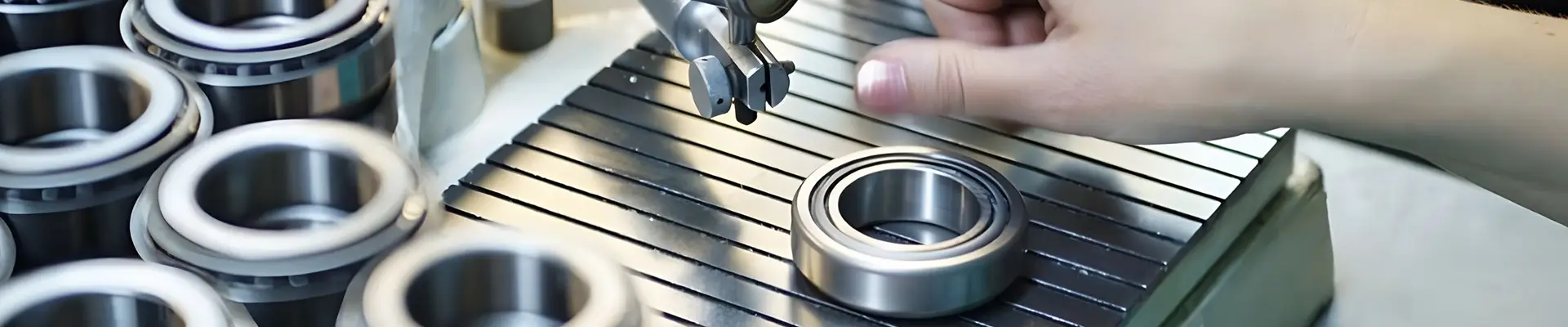
Understanding Deep Groove Ball Bearings: Essential Components for Industrial Applications
Deep groove ball bearings are one of the most commonly used types of bearings in various industrial applications. Their design consists of an inner and outer ring, a cage, and balls that fit into the grooves formed between the rings. This unique configuration allows the bearing to accommodate both radial and axial loads, making it highly versatile for numerous applications.
One of the primary advantages of deep groove ball bearings is their ability to operate smoothly under high speeds and loads. The design minimizes friction by allowing for free movement of the balls between the rings, which enhances performance and extends the lifespan of the bearing. This quality is particularly important in industries where machinery operates continuously, requiring components that can maintain performance over time.
In addition to their robust performance, deep groove ball bearings are favored for their simplicity and ease of installation. They can be used in a wide range of environments, from heavy machinery to small electronic devices, due to their adaptability to various operating conditions. Furthermore, the variety of available sizes and configurations makes it easy for engineers to select the right bearing for specific applications.
Another essential feature of deep groove ball bearings is their capacity to handle misalignment. While perfect alignment is often ideal, in many real-world scenarios, this is not achievable. Deep groove ball bearings can tolerate some degree of misalignment without significant impact on their performance, which is a valuable trait in applications where components may shift or settle over time.
Maintenance of deep groove ball bearings is relatively straightforward. Regular lubrication is crucial to minimize wear and prevent overheating, which can lead to premature failure. Depending on the operating conditions, the frequency and type of lubrication may vary. However, advancements in bearing materials and coatings have also led to the development of low-maintenance options, further enhancing their appeal.
In conclusion, deep groove ball bearings are indispensable components in a myriad of industrial applications. Their unique design allows for efficient load handling, high-speed performance, and adaptability to various conditions. As industries continue to evolve, the demand for reliable and efficient components like deep groove ball bearings will remain strong, making them a vital focus for engineers and manufacturers alike. Whether in heavy machinery, automotive applications, or electronic devices, understanding the role and benefits of these bearings is essential for optimizing performance and ensuring longevity in mechanical systems.
One of the primary advantages of deep groove ball bearings is their ability to operate smoothly under high speeds and loads. The design minimizes friction by allowing for free movement of the balls between the rings, which enhances performance and extends the lifespan of the bearing. This quality is particularly important in industries where machinery operates continuously, requiring components that can maintain performance over time.
In addition to their robust performance, deep groove ball bearings are favored for their simplicity and ease of installation. They can be used in a wide range of environments, from heavy machinery to small electronic devices, due to their adaptability to various operating conditions. Furthermore, the variety of available sizes and configurations makes it easy for engineers to select the right bearing for specific applications.
Another essential feature of deep groove ball bearings is their capacity to handle misalignment. While perfect alignment is often ideal, in many real-world scenarios, this is not achievable. Deep groove ball bearings can tolerate some degree of misalignment without significant impact on their performance, which is a valuable trait in applications where components may shift or settle over time.
Maintenance of deep groove ball bearings is relatively straightforward. Regular lubrication is crucial to minimize wear and prevent overheating, which can lead to premature failure. Depending on the operating conditions, the frequency and type of lubrication may vary. However, advancements in bearing materials and coatings have also led to the development of low-maintenance options, further enhancing their appeal.
In conclusion, deep groove ball bearings are indispensable components in a myriad of industrial applications. Their unique design allows for efficient load handling, high-speed performance, and adaptability to various conditions. As industries continue to evolve, the demand for reliable and efficient components like deep groove ball bearings will remain strong, making them a vital focus for engineers and manufacturers alike. Whether in heavy machinery, automotive applications, or electronic devices, understanding the role and benefits of these bearings is essential for optimizing performance and ensuring longevity in mechanical systems.
