Welcome to Linqing Hairui Bearing Manufacturing Co., Ltd.


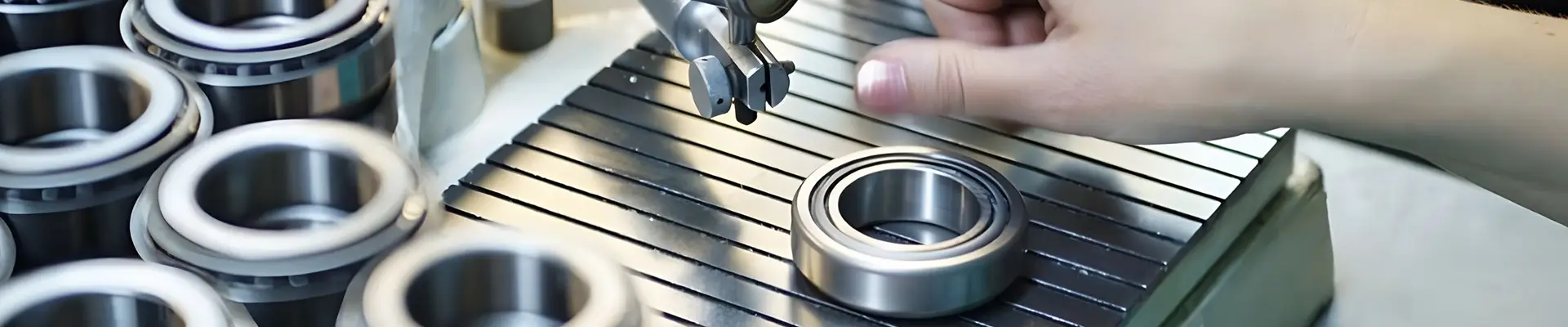
Global Automotive Bearings Market Accelerates as EV Expansion and Precision Engineering Drive Innovation
The global automotive bearings market is entering a new phase of rapid transformation as electric vehicles (EVs), smart mobility technologies, and stricter efficiency standards reshape engineering priorities across the automotive supply chain. Automotive bearings, long considered essential but low-visibility components, are now gaining strategic importance due to their role in powertrain efficiency, noise reduction, durability, and safety. Industry analysts report that manufacturers of automotive bearings are significantly increasing investments in material upgrades, automated production systems, and digital monitoring technologies to meet rising global demand.
One of the most notable drivers of market growth is the accelerating shift toward electric vehicles. EVs require bearings that can handle higher rotational speeds, lower lubrication loads, increased thermal stress, and quieter performance. As a result, automotive bearing suppliers are developing new solutions that integrate ceramic rolling elements, advanced heat-resistant steels, and optimized cage structures to support high-speed electric motors. These innovations contribute to reduced frictional losses, improved service life, and enhanced energy efficiency—key expectations for next-generation EV platforms.
Meanwhile, traditional internal combustion engine (ICE) vehicles continue to represent a substantial share of global production, and they also drive demand for improved automotive bearings. Engine bearings, transmission bearings, clutch release bearings, wheel hub bearings, and suspension-related bearings all play critical roles in performance stability. As automakers pursue better fuel economy and lower emissions, precision bearing design has become increasingly important. Manufacturers are refining surface treatments, optimizing lubrication pathways, and enhancing dimensional tolerances to reduce friction and increase reliability across harsh operating conditions.
Another major trend influencing the automotive bearings industry is the rise of Industry 4.0 and digitalized manufacturing. Bearing manufacturers are adopting robotics, AI-driven predictive quality inspection, and sensor-based monitoring systems to ensure consistent performance and traceability. Smart bearings equipped with embedded sensors are gaining popularity for commercial vehicles and heavy-duty fleets, enabling real-time performance tracking, condition monitoring, and predictive maintenance. This reduces downtime and long-term maintenance costs, presenting significant value for fleet operators.
Geographically, Asia-Pacific remains the fastest-growing region, led by China, India, Japan, and South Korea. Expanding automobile production, strong EV adoption, and well-established component manufacturing ecosystems are boosting demand for high-performance automotive bearings. Europe continues advancing premium and high-precision bearing technologies, especially for EVs and hybrid vehicles, while North America sees increasing investment in automotive component reindustrialization and supply-chain localization.
Environmental and regulatory pressures are also shaping material innovation in automotive bearings. Manufacturers are turning to eco-friendly lubricants, low-friction coatings, and sustainable production processes to align with global carbon-reduction goals. Lightweight bearing designs and recyclable components are increasingly requested by automotive OEMs looking to improve their environmental profiles.
Industry competition continues to intensify as global brands, regional suppliers, and new technology entrants invest heavily in R&D. Key players are expanding portfolios to include high-speed motor bearings, integrated hub assemblies, and long-life transmission bearings tailored for EV applications. Strategic partnerships between automakers and bearing producers are becoming more common, ensuring customized solutions that meet vehicle-specific engineering needs.
Analysts predict robust market growth through the next decade as automotive bearings evolve from standard mechanical components into precision-engineered, high-value elements critical to the functionality of future mobility systems. With EV dominance rising, digital monitoring becoming mainstream, and sustainability taking center stage, the automotive bearings industry is poised for continuous innovation and strong global demand.
