Welcome to Linqing Hairui Bearing Manufacturing Co., Ltd.


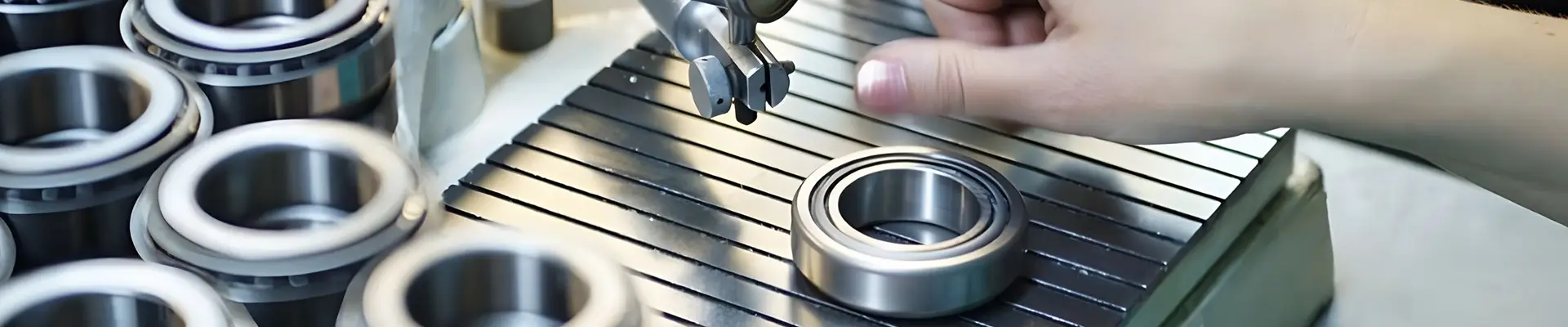
Low Friction Ball Bearings For Conveyors
Low friction ball bearings for conveyors are designed with the primary objective of minimizing energy consumption and maximizing the efficiency of conveyor systems. Conveyor systems are widely used in various industries, including manufacturing, logistics, and food processing, to transport goods and materials from one location to another. In these applications, reducing friction is crucial as it directly impacts the power requirements of the conveyor, as well as the wear and tear on the moving parts.
The construction of low friction ball bearings is optimized to reduce the contact between the moving elements. These bearings typically feature a precision-engineered design with smooth-rolling balls and races. The balls are made from high-quality materials, such as ceramic or advanced steel alloys, which have lower coefficients of friction compared to traditional steel balls. The races, both the inner and outer rings, are also carefully manufactured to have a smooth surface finish, further reducing the resistance as the balls roll.

In addition to the material and design of the balls and races, low friction ball bearings for conveyors may incorporate other features to minimize friction. For example, they may use specialized lubricants that have excellent anti-friction properties. These lubricants are formulated to reduce the friction between the balls and the races, as well as between the balls and the cage. Some bearings may also have a unique cage design that reduces the contact area between the cage and the balls, further enhancing the low-friction performance.
The benefits of using low friction ball bearings in conveyors are numerous. Firstly, they reduce the energy consumption of the conveyor system, which leads to cost savings in terms of electricity bills. Secondly, by reducing friction, the wear and tear on the bearing and other components of the conveyor are minimized, resulting in longer service life and reduced maintenance costs. This is especially important in industries where continuous operation of the conveyor is required, as any downtime for maintenance can be costly.
Moreover, low friction ball bearings for conveyors also contribute to a more reliable and consistent operation. With less friction, the conveyor can move goods and materials more smoothly, reducing the risk of jams or disruptions. This is particularly important in industries such as food processing, where the integrity of the products being transported needs to be maintained. Overall, low friction ball bearings for conveyors are essential components that play a significant role in improving the performance, efficiency, and reliability of conveyor systems across a wide range of industries.
Related News
